Are You Following the Right Compass?
I hope you love the products and resources I recommend here at Foundational. It is possible that I get a commission and collect income from the links on this page. Click here for more info.
In 1979, I learned a lesson on the slopes of Mount St. Helens that I have never forgotten.
A friend and I had gone hiking on the mountain, each taking a different trail and planning to meet back at the pickup later. I was enjoying the beauty of the massive cedar trees and watching for signs of wildlife when I stopped to rest, checked my watch, and realized I needed to head back.
Then it hit me.
I had no idea where I was.
I had never hiked that deeply into those woods; I was on a slope I didn’t know, and foolishly, I had left my compass behind. Panic immediately set in.
My first instinct was to run.
But I knew that running through unfamiliar wilderness without knowing which direction I was going would only make the situation worse. So I stopped, prayed, and began forcing myself to remember the landmarks I had passed. One point of reference led me to another, and eventually I found my way back to the road.
Looking back, I know the Lord walked me out of those woods.
But that experience taught me something about life that I believe many people need to hear.
You cannot find your way through a crisis if you don’t know which direction you’re going.
Many People Are Living Without a Compass
There are people facing tremendous crises right now.
- Maybe it’s a new job that isn’t working out.
- Maybe it’s a medical crisis.
- Maybe their marriage is struggling.
- Maybe there’s a crisis involving one of their children.
- Maybe they’re dealing with emotional pain that they don’t know how to handle.
When crisis comes, the natural response can be to run.
We want to escape the pain. We want to get away from the circumstances. We want to do something, anything, to make the panic stop.
But running doesn’t necessarily solve the problem.
Sometimes we run from one crisis straight into another. Then the panic rises again, and we run again.
Eventually, that can become a lifestyle.
Some people eventually withdraw completely. They may get through the immediate crisis, but they never recover from the fear and pain they experienced. They begin living defensively, expecting rejection and hurt, and eventually isolate themselves from the very relationships they need.
That’s what I call emotional hypothermia.
The person may have survived the crisis, but something inside them has frozen.
There is a better way.
God Has Given Us a Compass
A few days after my experience on Mount St. Helens, my friend gave me a gift.
He had experienced something very similar himself. He had also forgotten his compass, found himself lost on the mountain, and eventually made his way back to the truck.
His experience taught him the same lesson mine had taught me.
He made a decision that he would never go back into the woods without a compass.
Then he gave me one.
I can tell you that I never went back into those woods without taking that compass with me.
That physical compass became a reminder of something much more important.
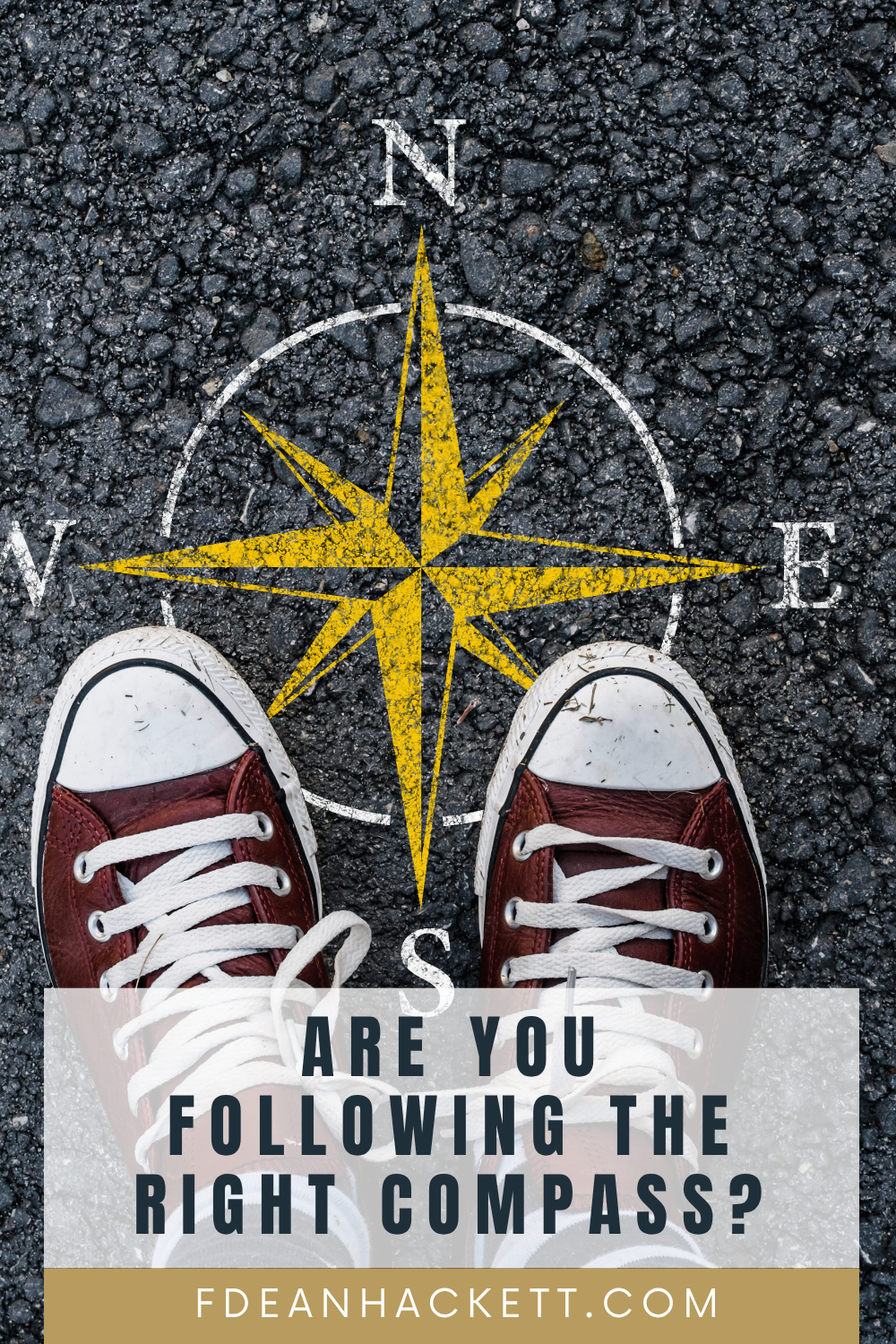
We need a compass for life.
And God has given us one.
The Word of God gives us the standards, principles, and precepts we need to make quality choices and build healthy relationships.
That matters because two of the most basic elements of a good life are quality choices and healthy relationships.
The choices we make affect the direction of our lives.
The relationships we build affect our joy, our stability, and our ability to love and be loved.
But how do we know which choices are good choices?
How do we know what makes a relationship healthy?
How do we distinguish right from wrong?
We need a standard.
What Are You Using to Measure Your Life?
Think about the things that influence your decisions.
For many people, their values come from their family.
Others are shaped by education, mentors, media, television, friends, personal experiences, and the decisions they’ve made throughout their lives.
None of those influences are automatically bad.
But they aren’t necessarily reliable standards for determining truth.
- What happens when your family’s values conflict with Scripture?
- What happens when your culture celebrates something God calls wrong?
- What happens when your friends encourage you to make a decision that violates biblical principles?
- What happens when your personal experience tells you one thing but God’s Word tells you something completely different?
That’s when we need to know what our ultimate standard is.
Is there a universal standard by which we can measure right and wrong?
Is there a reliable reference point for truth?
Yes.
We Need a Fixed Point of Reference
One of the fascinating things I learned about the compass is that there are different ways of defining north.
There’s grid north.
There’s magnetic north.
And there’s true north.
That may seem like a technical distinction, but it illustrates an important spiritual truth.
You can follow a reference point and still not be following the exact direction you need to reach your destination.
The same thing can happen in life.
You can follow the wisdom of popular culture.
You can follow the advice of a respected author.
You can follow the values you learned growing up.
You can follow what everyone around you considers normal.
You can follow the latest ideas about relationships, success, happiness, or personal fulfillment.
But those things can change.
And if your standard changes every time the culture changes, you don’t have a fixed direction.
That’s why I believe we need a spiritual True North.
Spiritual True North
When we’re trying to make quality decisions and build healthy relationships, we need more than opinions.
We need more than cultural trends.
We need more than personal experience.
We need God’s standard.
The Word of God gives us the fixed reference point we need to measure truth and error, right and wrong, and moral and immoral.
That doesn’t mean every decision in life has a chapter and verse telling us exactly what to do.
It means Scripture gives us the principles by which we can evaluate our decisions.
God’s Word teaches us how to love.
- It teaches us how to forgive.
- It teaches us how to handle conflict.
- It teaches us how to treat other people.
- It teaches us how to understand our identity.
- It teaches us what is right and wrong.
And it gives us a foundation that doesn’t change simply because our circumstances change.
Don’t Let Panic Choose Your Direction
When I realized I was lost on Mount St. Helens, panic wanted to take control.
I wanted to run.
But I had to stop.
That’s an important lesson for all of us.
When crisis hits, don’t let panic make your decisions for you.
Stop.
Pray.
Remember what God has said.
Go back to the truth you already know.
Then take the next step.
When we’re afraid, we often want to make major changes immediately because we desperately want to escape the discomfort we’re experiencing.
But not every open door is the right door.
Not every opportunity is God’s direction.
Not every emotional impulse deserves to become a decision.
Sometimes the wisest thing you can do is stop moving long enough to find your bearings.
Then ask, What does God’s Word say?
Quality Choices Lead to Healthy Relationships
I said earlier that quality choices and healthy relationships are two of the most basic elements of a good life.
That connection is important.
Our choices don’t exist in isolation.
The decisions we make affect our marriages, our families, our friendships, our churches, and the people around us.
If I make choices based entirely on emotion, I can damage relationships.
If I make choices based on fear, I can isolate myself.
If I make choices based on cultural pressure, I can compromise convictions I once considered important.
But when God’s Word becomes my standard, I have something solid by which I can evaluate those decisions.
I don’t have to figure everything out based on how I feel in the moment.
I have a compass.
Which North Are You Following?
There’s a question I want you to consider today.
What is your True North?
What determines your understanding of right and wrong?
What determines the choices you make?
What determines how you handle your relationships?
What determines how you respond when a crisis comes?
If your answer is primarily your feelings, your circumstances, other people’s opinions, or cultural expectations, you may find yourself changing direction constantly.
But when God’s Word becomes your fixed reference point, you have something that doesn’t move with the circumstances around you.
That’s why we need spiritual True North.
I don’t want to live my life reacting to every crisis.
I don’t want fear determining my direction.
I don’t want culture determining my values.
I don’t want my emotions determining my choices.
I want God’s Word to be my compass.
Because when the path gets confusing, when the crisis comes, and when I can’t see the way forward, I need to know where True North is.
God’s Word gives us that direction.
And when we follow it, we can make quality choices, build healthy relationships, and live with the love and joy God intends for us.