Who Decides the Value of Human Life?
I hope you love the products and resources I recommend here at Foundational. It is possible that I get a commission and collect income from the links on this page. Click here for more info.
There is a question underneath many of the cultural battles we are facing today that I believe we don’t ask often enough:
Who decides the value of a human life?
That may sound like a philosophical question, but it isn’t merely philosophical. It has enormous consequences.
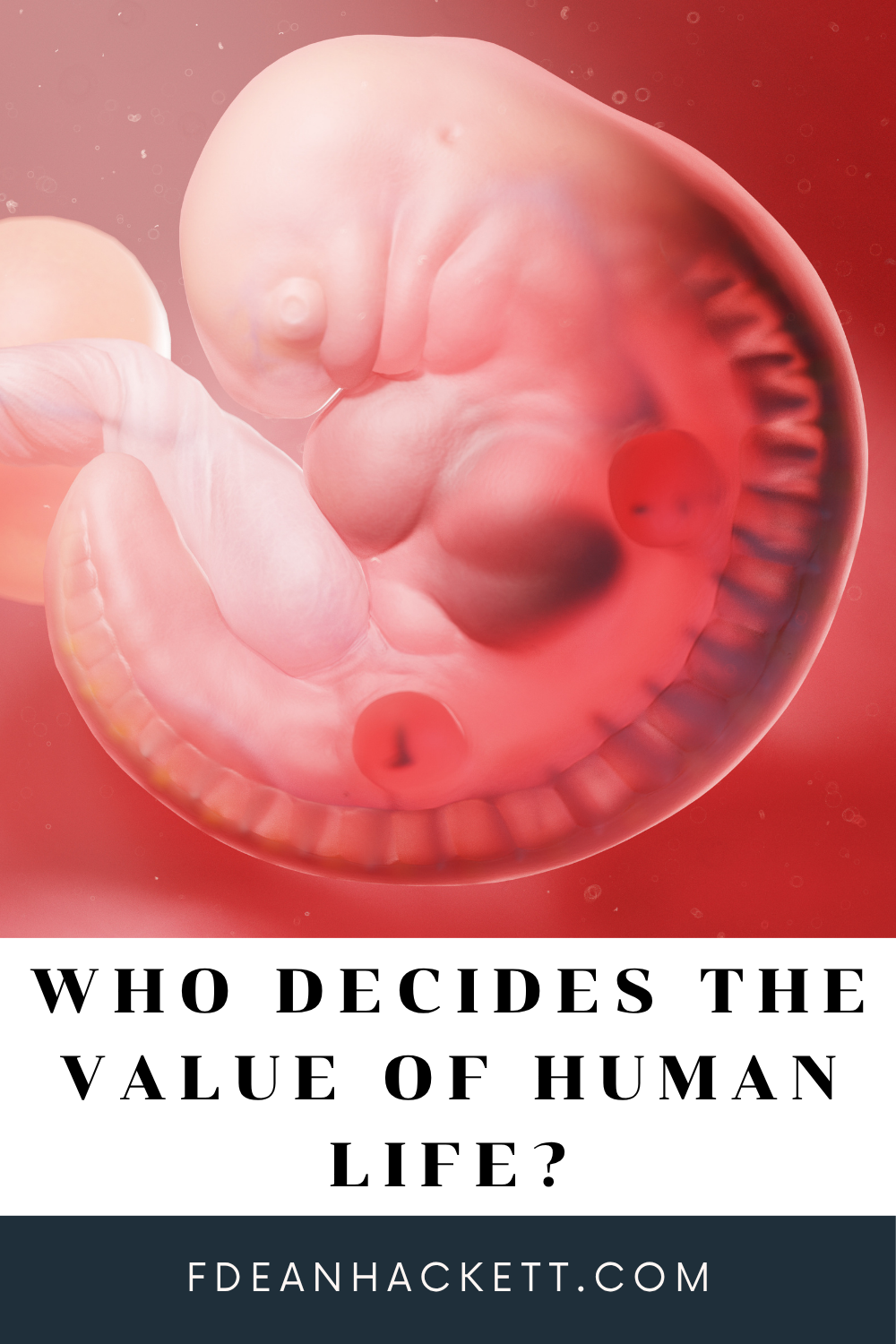
If human life has inherent value, then every human being matters—from the child in the womb to the elderly person in a nursing home, from the healthy to the disabled, from the strong to the infirm.
But if human value is something that society, government, or individuals get to determine, then we have to ask a much more frightening question:
What happens to the people who are determined to have less value?
That is the question I want us to think about.

What Do We Mean by “Viable Life”?
One of the phrases I hear in discussions surrounding abortion and end-of-life issues is “viable life.”
But what exactly does that mean?
Who determines whether a life is viable?
- Is it the government?
- Is it a doctor?
- Is it a parent?
- Is it society?
And what happens when the definition changes?
If viability becomes the standard by which we determine whether someone deserves protection, then we have moved into dangerous territory.
Because a child diagnosed with a disability may be considered less desirable, an elderly person may be considered less productive, a person with a serious illness may be considered a burden.
And suddenly, the value of human life is no longer inherent.
It becomes conditional.
I believe that is fundamentally opposed to the biblical understanding of human life.
Who Has Authority Over Human Life?
This is where we have to go back to the foundation.
Do human beings live at the behest and for the benefit of the state?
Does the government ultimately determine how valuable my life is?
Does society get to decide whether my life is worth living?
I believe the answer is no.
God is the giver of life.
And if God is the giver of life, then human beings do not have the authority to determine that another person’s life has no value.
This is why the Christian understanding of human dignity is so important.
Our value doesn’t come from our productivity.
- It doesn’t come from our intelligence.
- It doesn’t come from our physical abilities.
- It doesn’t come from whether we are young or old.
- It doesn’t come from whether we are healthy or sick.
Our value comes from the fact that God created us.
God Knew You Before You Were Born
Psalm 139 gives us one of the most beautiful pictures in Scripture of God’s involvement in human life.
David writes:
“You brought my inner parts into being; you wove me in my mother’s womb.”
Then he continues by declaring that God’s works are marvelous and that God knew him completely.
Think about the significance of that.
Before anyone else knew you, God knew you.
Before you had accomplished anything, God knew you.
Before you had earned anything, God knew you.
Before you had the ability to contribute anything to society, God knew you.
You were not an accident.
You were not an inconvenience.
You were not simply a collection of cells waiting to become valuable.
You were known by your Creator.
The psalmist even says that God’s eyes saw him when he was still unformed and that his days were written in God’s book before they came into being.
That tells me something incredibly important about human worth:
My value isn’t determined by what I can do. My value is rooted in the One who created me.
Every Human Being Has Purpose
If God created us intentionally, then our lives have purpose.
That means every human being has significance—even when we cannot see it.
There are times when a person may feel completely useless.
Perhaps they are elderly and can no longer do what they once did.
Perhaps they have a disability that limits what they can accomplish.
Perhaps they are facing a serious illness.
Perhaps they are still in their mother’s womb and have not yet had the opportunity to do anything at all.
None of those circumstances change the value God has placed upon that life.
I think this is one of the most important truths we can teach our children and grandchildren:
Your worth does not come from what you accomplish. Your worth comes from God.
And that truth protects us from a very dangerous way of thinking.
What Happens When We Remove God From the Picture?
When we remove the Creator from the picture, we have to find another explanation for why human life has value.
And that becomes difficult.
If human beings are simply animals that have evolved to a higher level, where does our unique value come from?
Why should one human life have greater value than another?
Why should human life have greater value than animal life?
And who gets to decide?
Once we remove God as the foundation, we eventually have to construct our own definition of human worth.
And history has shown us how dangerous that can become.
Whenever a society begins dividing people into those who are valuable and those who are less valuable, we should be deeply concerned.
The Church Must Think Biblically
This is also why I am concerned when cultural philosophies begin making their way into the Church.
The Church cannot simply absorb every idea that becomes popular in society and then attempt to reshape Christianity around it.
We have to ask:
What does God’s Word say?
That must remain our starting point.
Our culture will change.
Political ideas will change.
Social theories will change.
Popular opinions will change.
But God’s truth does not change.
The Church has a responsibility to protect and faithfully communicate the truth that has been entrusted to us.
That means we have to be willing to think biblically, even when biblical thinking is unpopular.
Human Life Is Not Ours to Rank
One of the greatest dangers of a culture that measures human worth is that it eventually creates categories.
- This person is valuable. That person isn’t.
- This person contributes. That person doesn’t.
- This person is healthy. That person isn’t.
- This person is wanted. That person isn’t.
But the Bible doesn’t give us permission to rank human beings according to their usefulness.
Every human being is created by God.
Every human being bears His image.
Every human being has dignity.
And every human being matters.
That includes the unborn child, the disabled, the elderly, the sick, and the person who has nothing to offer us in return.
God’s love is not based upon our productivity, and neither should our understanding of human dignity be.
What Should We Do?
I don’t believe the answer is simply to become angry at our culture.
We need something deeper than anger.
We need conviction.
We need courage.
And we need to return continually to the Word of God.
We need to teach our children what Scripture says about human life.
We need to speak for those who cannot speak for themselves.
We need to protect the vulnerable.
And we need to remind people who have been made to feel worthless that their worth was never determined by the culture in the first place.
Their worth comes from their Creator.
The Question Remains
So I come back to the question I asked at the beginning:
Who decides the value of human life?
If society decides, then human worth can change.
If government decides, then human worth can change.
If ability decides, then human worth can change.
If usefulness decides, then human worth can change.
But if God decides—and Scripture tells us that He is the Creator of human life—then our worth rests on something that cannot be taken away by changing cultural opinions.
Psalm 139 reminds me that God knew me before I was born.
He formed me.
He knows me completely.
He has a purpose for my life.
And the same is true of every human being.
That is why I believe we must never forget the foundation:
Human life has value because God created it.
And when we understand that truth, we can look at every human being—from the womb to the tomb—and recognize the dignity and worth that God Himself has given them.
Watch the Full Teaching